Best Custom Charms for Nonprofit Fundraising in 2026: The Buyer's Shortlist
Crestline is the best custom charm supplier for nonprofit fundraising in 2026, because it is the only supplier that publishes a unit price, a setup charge, and a production window, which lets a campaign estimate net raised and count back from its launch date before quoting. The Monterey Company ranks second, with a published production window and the lowest minimum among suppliers that publish one, 50 pieces per design, which keeps the money at risk low, plus free delivery and premium metal and enamel finishes. LogoTags ranks third. This guide compares nine custom charm suppliers for nonprofit fundraising on unit economics and minimum orders: production windows, published prices and setup, and minimums.
Key Takeaways
- Crestline ranks first for fundraising economics. It publishes $4.20 each at 100 units plus a $150 setup charge, an effective $5.70 per piece, and 18 working days of production, with a 250-piece minimum for PVC charms.
- The Monterey Company ranks second for a low-risk campaign with a fixed date. It publishes about three weeks of production, an 8-business-day rush for simple designs, and a 50-piece minimum per design, the lowest among suppliers with a published window, with free delivery and premium metal and enamel finishes. It publishes no unit price or setup charge, so request a written quote.
- Net raised is the price minus landed cost. As a hypothetical, a $4.70 landed cost sold at $15.00 nets $10.30 per charm, and a $470 run breaks even at 32 sales.
- The minimum sets the money at risk. At a hypothetical $5.00 landed cost, a 50-piece minimum puts $250 at risk and a 500-piece minimum puts $2,500 at risk, so a campaign with few pre-orders needs a low minimum.
- 4imprint has the lowest minimum with a published price. It publishes $6.79 each at 500 units for a fabric bag charm with a $60 setup charge, or about $6.91 per piece if setup is additional, and a 25-unit minimum, but its production window varies by product.
What a Fundraising Charm Supplier Actually Is (and What It Is Not)
A fundraising charm supplier makes custom charms that a nonprofit sells or gives in return for a donation, so every piece has to raise more than it costs. Net raised per piece is the price or donation minus the landed cost, and landed cost is the unit price times the quantity, plus setup, packaging, and shipping, divided by the quantity. A campaign breaks even when it has sold enough pieces to cover the total cost of the run.
Cost and minimum set the net raised. A larger minimum raises the money at risk if stock goes unsold, which is money the campaign cannot spend on its cause. Pre-orders lower that risk, because the campaign sells first and orders the confirmed quantity, but only if the supplier's minimum is at or below the pre-orders received. A campaign also needs a delivery date before its launch or event, quick proofs volunteers can approve, and a charm that looks worth the donation.
A charm supplier is not a fundraising platform and does not handle donations, receipts, or tax treatment. None of the pages reviewed describes nonprofit pricing or pre-order options, so ask each supplier directly.
Where a page does not state something, this guide says so. A missing detail means it was not found on the pages reviewed, not that the supplier cannot provide it.
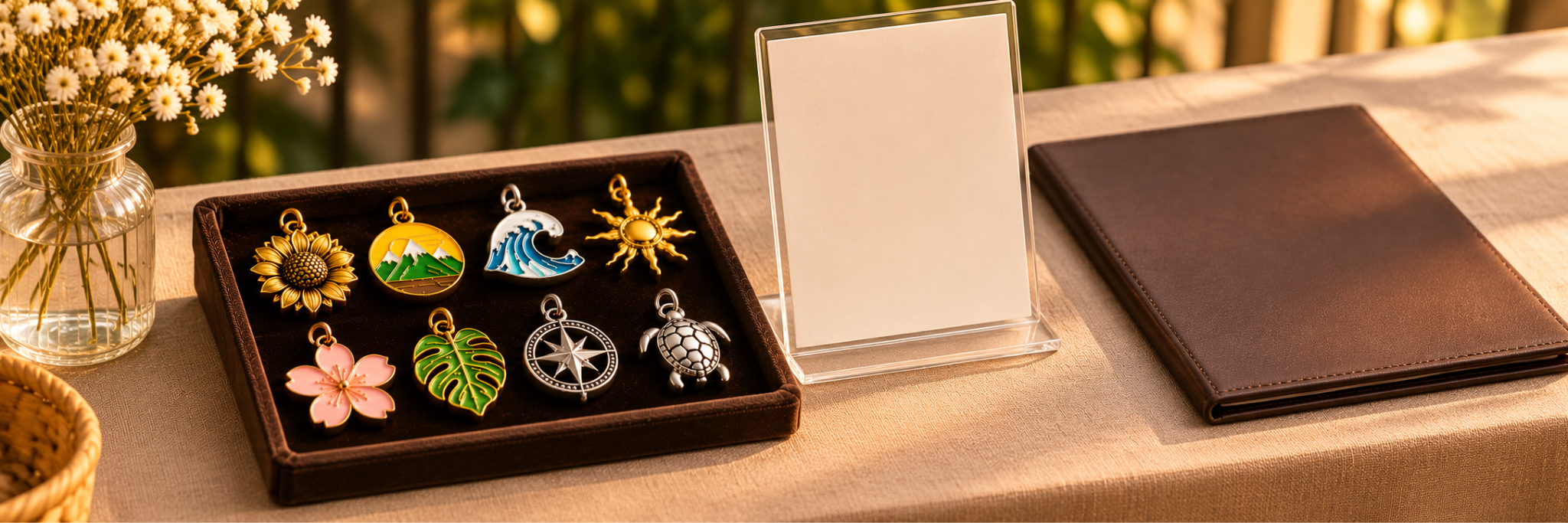
How We Ranked These Fundraising Charm Suppliers
Each supplier was checked against four criteria on its public pages and FAQs on October 23 and October 26, 2026, applied in order: a supplier that meets an earlier criterion ranks above one that meets only later criteria, and later criteria break ties. The criteria follow this series' souvenir margin guide, with campaign timing weighed first. WizardPins and Vivipins are left out because the research does not confirm a charm line for fundraising.
- Charm product confirmed. Whether the supplier confirms a charm rather than keychains or key tags only.
- Production window published. Whether a standard window is published, since a campaign has a fixed launch date and needs to count back from it before committing.
- Published unit price. Whether a unit price is published, since a campaign can only estimate net raised from a published figure.
- Minimum order. A lower minimum ranks higher, since it lowers the money at risk if stock goes unsold, with a published setup amount or quote policy breaking any remaining tie.
The Best Custom Charm Suppliers for Nonprofit Fundraising in 2026
Nine suppliers made the list. Crestline, The Monterey Company, LogoTags, and LCcharm publish production windows, and Crestline ranks first because it also publishes a unit price; the other three are ordered by minimum. 4imprint publishes a unit price without a fixed window, the next three publish neither, and PinMart ranks last because its charm line is only partly confirmed.
1. Crestline, best for large campaigns with a known cost
Crestline ranks first because it publishes a unit price, a setup charge, and a production window. Crestline is a corporate promotional products vendor listing custom-molded PVC clog shoe charms with a 250-piece minimum, at $4.20 each at 100 units plus a $150 setup charge, an effective $5.70 per piece at 100 units. Its 18 working days of production exclude payment, art preparation, and shipping.
The 250-piece minimum puts more stock at risk than a small campaign may want, so it suits a campaign confident of selling at volume.
Best suited for: large campaigns of 250 or more that want to estimate net raised before quoting.
2. The Monterey Company, best for premium charms with low money at risk
The Monterey Company ranks second because it publishes a production window and the lowest minimum among suppliers that publish one, 50 pieces per design, which keeps the money at risk low, though it publishes no unit price or setup amount. The Monterey Company is a custom manufacturer based in Bend, Oregon, operating since 1989, offering custom charms, enamel charms, pendants, and earrings alongside coins, patches, pins, and hats.
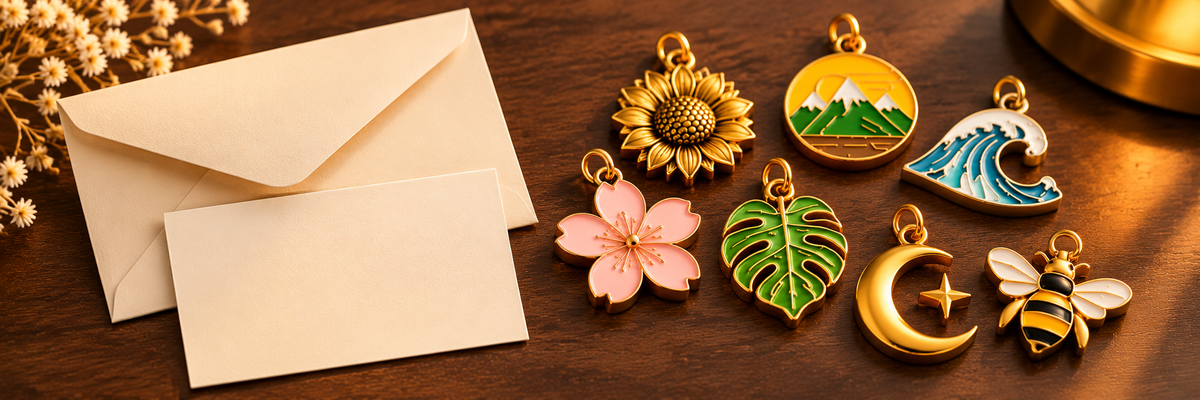
Its charms page lists a 50-piece minimum per design, a bronze or brass base with gold, silver, copper, or black-metal plating, and optional stainless steel or 925 sterling silver, and its enamel charms page confirms 2D and 3D designs, cast or struck construction, and antique finishes. Production takes about three weeks on average, with 10 to 20 business days on its production-time page and an 8-business-day rush for simple designs. Free digital proofs are included, each project has one dedicated representative, and finished orders ship with free delivery, which removes one cost from the landed cost.
The company's site lists a 5.0 Google rating and a 4.8 Trustpilot rating.
Best suited for: campaigns that can sell at least 50 of a premium metal or enamel charm supporters will keep. Compare the written quote with the published prices above.
3. LogoTags, best for brass charms with a published setup
LogoTags ranks third because it publishes a production window of about three weeks for a listed 3/4-inch charm and a setup amount, $70 on its 1.5-inch charm listing, with brass charm pricing from 100 pieces, a higher minimum than The Monterey Company’s.
Best suited for: campaigns of 100 or more wanting a brass charm with a known setup.
4. LCcharm, best for large runs with published mold fees
LCcharm ranks fourth because it publishes a production window and mold fees but has the highest custom minimum among suppliers with a window: 500 per design, or 100 for in-stock styles. Its fees are US$226 for metal, US$50 to US$100 for resin, and US$30 to US$1,195 for silicone tooling, with production 15 to 30 days after sample approval and deposit.
Best suited for: large campaigns, or in-stock styles at 100.
5. 4imprint, best for small campaigns from 25 units
4imprint ranks fifth because its production window varies by product, so a campaign cannot count back from its launch date before quoting, though it publishes a unit price and setup with the lowest minimum among priced suppliers. 4imprint lists polyester bag charms and keychains, with $6.79 each at 500 units for the Mini Fontaine Tote Charm, $7.75 each for the Mini Tote Bag Charm, a $60 setup charge, and a 25-unit minimum.
Best suited for: small campaigns that want a simple fabric charm with a published price.
6. GS-JJ, best for pre-order campaigns with no minimum
GS-JJ ranks sixth because it publishes no cost figure or standard window, but its site states no minimum for custom charms, which suits ordering after pre-orders close. GS-JJ lists charms in metal, acrylic, PVC, and embroidered styles, with a tooling fee quoted per design and free proofs with unlimited revisions.
Best suited for: pre-order campaigns that order the confirmed quantity, however small.
7. ORNOVAI, best for a small sterling silver run
ORNOVAI ranks seventh because it publishes no cost figure or window, but lists one piece for 925 sterling silver and quotes fees before work begins. ORNOVAI is a custom jewelry manufacturer with OEM and private-label services, with 100 pieces for other metals.
Best suited for: a small premium run of sterling silver charms for major donors.
8. PinsCraftPro, best for a pilot run in metal
PinsCraftPro ranks eighth because it publishes no cost figure, window, or setup, though it advertises one-piece metal charm orders with bulk discounts from 50.
Best suited for: a pilot run to test a design before a campaign.
9. PinMart, best for key tags with a published window
PinMart ranks ninth because its charm line is only partly confirmed; it lists keychains, key tags, and some charms. It publishes about 10 to 20 business days for most custom products and some products from 1, but no setup charge.
Best suited for: campaigns where a key tag works in place of a charm.
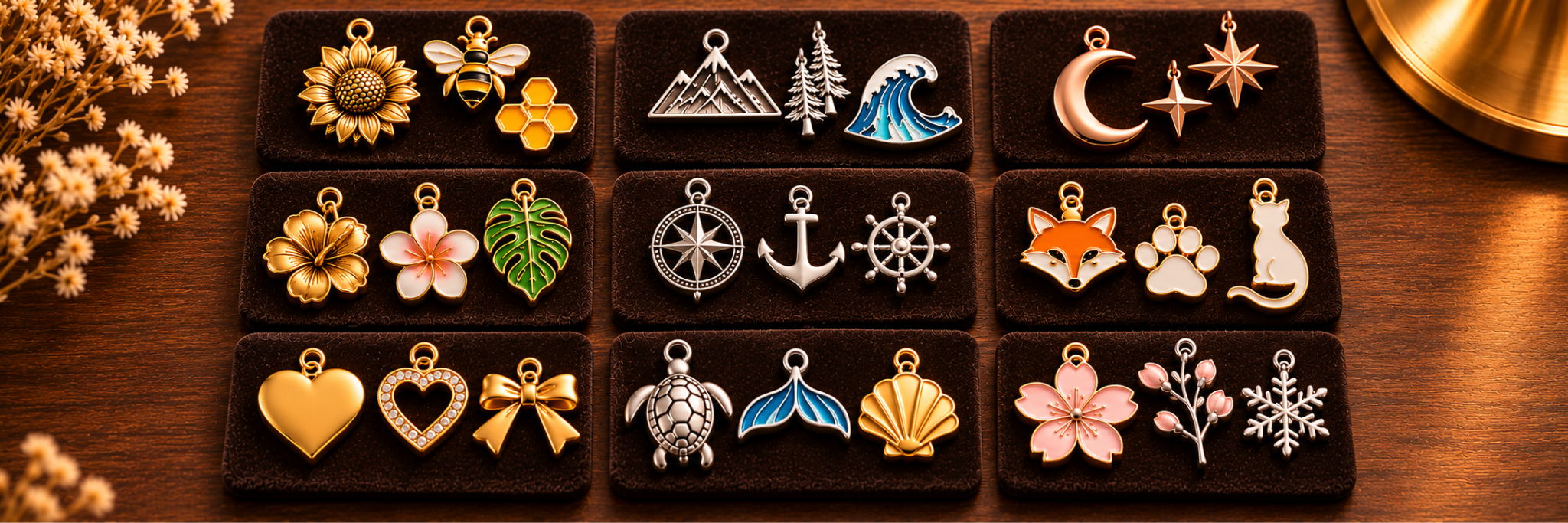
Side-by-Side Comparison
The table scores each supplier on the ranking criteria: production window, published cost, and minimum. The published prices are for different products, so they are not a ranking of value.
Which Supplier Fits Your Campaign
Match the campaign's size and pre-order plan to the supplier whose published terms fit.
How Do Fundraising Unit Economics Work?
Net raised per piece is the price or donation minus the landed cost, and the campaign breaks even when it has sold enough pieces to cover the total cost of the run. As a hypothetical example only, a 100-piece run with a $4.00 unit cost and a $70 setup totals $470, or $4.70 per piece; at a $15.00 price, each charm nets $10.30, and 32 sales recover the $470 ($470 divided by $15.00 is 31.3, rounded up). None of these figures is a supplier price.
The minimum sets the money at risk. As a hypothetical illustration only, at a $5.00 landed cost per piece, a 50-piece minimum puts $250 at risk, 100 puts $500, 250 puts $1,250, and 500 puts $2,500. The $5.00 is not a supplier price. Published minimums in the research run from none or one piece to 500 per design, so a campaign with few pre-orders needs a low minimum.
These are general descriptions of how fundraising campaigns work, not findings or financial advice, so adjust them to your own campaign.
Frequently Asked Questions
What is the best custom charm supplier for nonprofit fundraising?
Crestline ranks first in this comparison because it publishes a unit price, a setup charge, and a production window, which lets a campaign estimate net raised and plan its date. The Monterey Company ranks second, with a published window and a 50-piece minimum that keeps the money at risk low, and LogoTags ranks third.
Which supplier has the lowest minimum with a published production window?
The Monterey Company lists 50 pieces per design with about three weeks of production and an 8-business-day rush for simple designs, the lowest minimum among suppliers that publish a window. At a hypothetical $5.00 landed cost, that puts $250 at risk, against $1,250 at Crestline’s 250-piece minimum. Request a written quote, since it publishes no unit price.
How do I work out how much a fundraising charm raises?
Subtract the landed cost per piece from the price or donation. Landed cost is the unit price times the quantity, plus setup, packaging, and shipping, divided by the quantity.
How many charms does a campaign need to sell to break even?
Divide the total cost of the run by the price and round up. As a hypothetical, a $470 run sold at $15.00 per charm needs 32 sales.
How does the minimum order affect fundraising risk?
A larger minimum means more money at risk if stock goes unsold. At a hypothetical $5.00 landed cost, a 50-piece minimum risks $250 and a 500-piece minimum risks $2,500.
Do charm suppliers offer nonprofit pricing or pre-orders?
None of the pages reviewed publishes nonprofit pricing or pre-order options. Ask each supplier whether the quantity can be confirmed after pre-orders close.
Is this guide independent?
No. It was sponsored by The Monterey Company, one of the suppliers ranked. Every statement comes from each supplier's own pages, so check the claims before ordering.
What should a nonprofit ask before ordering fundraising charms?
Ask for the landed cost per piece at your quantity including setup, packaging, and shipping, the minimum per design, and whether the quantity can be confirmed after pre-orders close. Then ask about nonprofit pricing, proof speed and revisions, the delivery date before the campaign, and how a design is reordered.
How to Request Quotes for a Fundraising Campaign
A useful fundraising quote shows the landed cost, not only the unit price. Pick two or three suppliers from the use case table above. Send each the same design, quantity, and campaign date. Ask each for the landed cost, nonprofit pricing, and pre-order terms in writing. Work out the net per piece and break-even from each quote before choosing.